
How to Verify NFT Authenticity Before Buying
Match the contract address, token ID, and on-chain ownership to confirm an NFT is genuine.
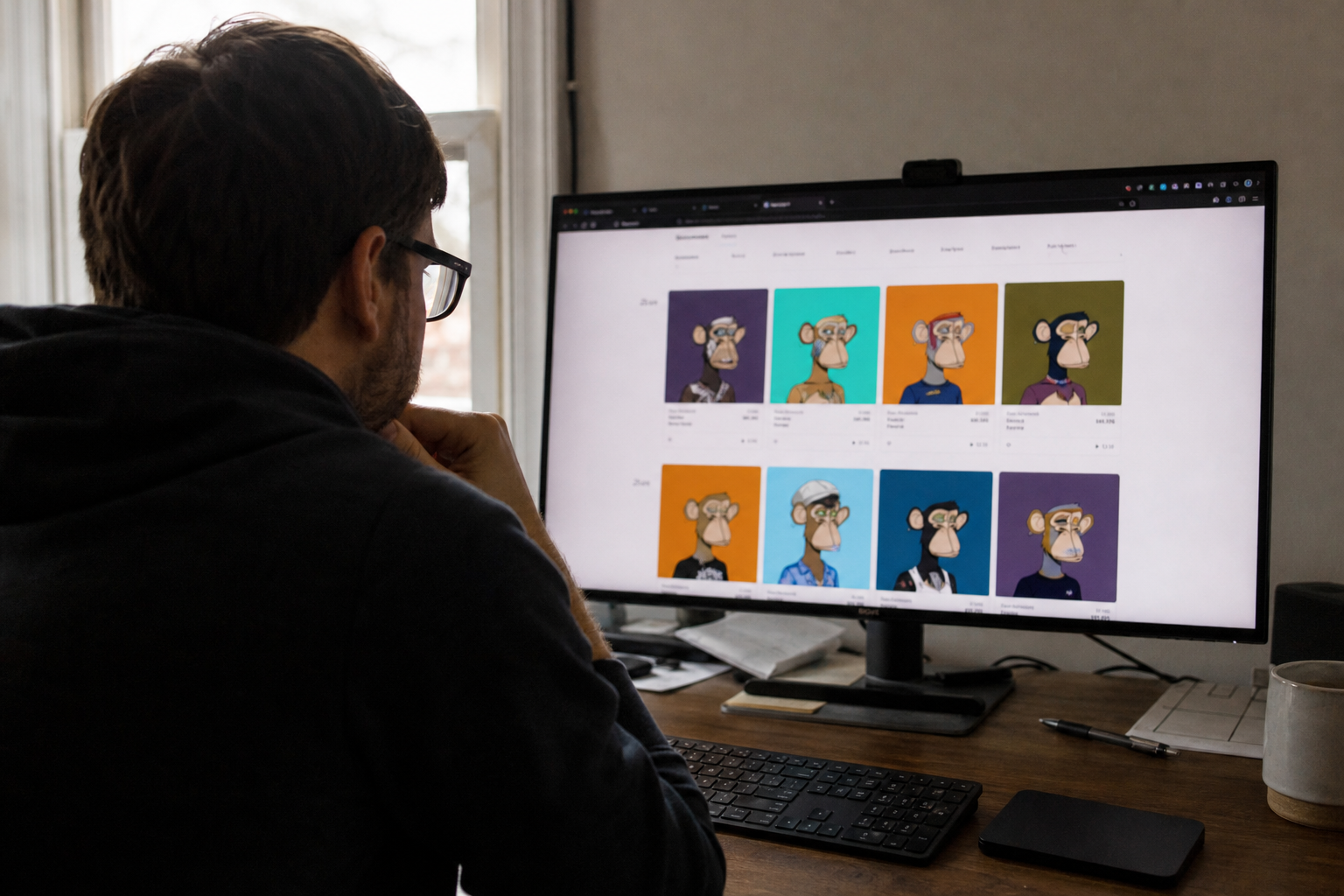
Knowing how to verify NFT authenticity protects buyers from counterfeit tokens, copied artwork, and fraudulent listings.
A marketplace badge or familiar collection name does not guarantee that the token is legitimate.
Verification is performed by matching the smart-contract address, token ID, and blockchain network to information from an official project source, then inspecting the on-chain ownership and transfer history.
Relying on a marketplace interface alone leaves room for error.
Scammers can copy images, mimic collection names, and create contracts that appear similar to popular projects.
Independent verification using a blockchain explorer and official project sources is the most reliable method to confirm that the token you are buying corresponds to the contract and token ID the creator minted.
Verification depends on three on-chain identifiers working together.
The contract address identifies the collection, the token ID identifies the individual asset, and the blockchain explorer shows the current on-chain owner and transfer record.
Start with the Official Contract Address
The contract address is the unique identifier of the smart contract that created the NFT collection.
Most projects publish this address through an official website or verified social account; always seek the most current official source for the address.
Copy the contract address from the creator’s official source, not from a marketplace listing or third-party site.
Compare it character-by-character with the address shown on the marketplace and in the blockchain explorer.
A single changed character means you are looking at a different contract.
Counterfeit projects often deploy contracts with names and images identical to popular collections, hoping buyers will not check the address.
If the marketplace address does not match the official address, do not proceed with the purchase.
Treat any discrepancy as unresolved until the creator confirms the correct address through an independently trusted channel.
Check the Token ID and Current On-Chain Owner
The token ID identifies the specific NFT within the contract.
Most collections use sequential or unique identifiers to distinguish one token from another.
Open the blockchain explorer for the network the NFT is on and search for the contract address.
Locate the token ID in the contract’s token list or transaction history.
If the explorer supports the token standard and displays ownership information, it will show the current on-chain owner’s wallet address.
Compare this address with the wallet of the seller on the marketplace.
If they do not match, the seller may not control the token directly; they may be authorized through an approved operator, a custodial marketplace arrangement, or a smart-contract mechanism.
Some explorers provide a function to query the owner directly using the contract’s standard ownership method.
This on-chain check is more reliable than trusting the marketplace’s display alone, because the blockchain record cannot be edited by the seller or platform.
Review the Transfer History and Provenance
The transfer history records wallet addresses that have held the token and transactions involving it.
A clear history often begins with the mint transaction and continues through each sale or transfer.
Look for the original mint event if the explorer displays it.
It may show the token being created by the contract and sent to the creator’s wallet or an initial buyer.
If the history does not display an identifiable mint or shows the token appearing in a wallet without a clear origin, investigate further or consult the contract documentation.
Gaps, contradictions, or suspicious activity in the transfer history are warning signs.
A token that was minted recently but claims to be part of an older collection, or one that moved through many wallets in a short time, may be part of a scam.
Provenance alone does not prove legitimacy, but a transparent and consistent history supports verification when combined with the other checks.
Inspect Metadata and Storage Location
NFT metadata includes the token’s name, description, image, and attributes.
Some token standards provide a metadata URI field in the smart contract that points to the location where this information is stored; support for metadata is optional in certain standards and the URI may be empty or changeable.
Check whether the metadata is stored on-chain, on a decentralized network, or on a centralized server.
The storage method and URI design affect whether the image and data can be changed or removed after you buy the token.
| Storage Type | Characteristics |
|---|---|
| On-chain | Data is written directly into the blockchain; generally difficult to alter, though mutability can depend on contract-controlled mechanisms |
| IPFS or Arweave | Decentralized storage; persistence depends on pinning, replication, payment, and service-specific policies |
| Centralized server | Hosted by the creator or platform; can be changed, moved, or taken offline |
A token URI that points to a centralized server means the creator retains control over the image and metadata.
This is not inherently fraudulent, but it introduces risk that the content may not persist or may be altered.
Compare the image displayed on the marketplace with the image returned by the token URI if accessible.
If they differ, or if the URI does not load, the token’s metadata may be incomplete or manipulated.
Cross-Check Creator Identity and Official Channels
Verify that the contract address, collection name, and marketplace listing match the information published by the creator through official channels.
Official channels include the project’s website, verified social accounts, and community links.
Do not rely on a marketplace profile alone.
Scammers can create profiles with similar names, copied images, and fake verification badges.
Always trace the contract address back to a source you trust independently.
If the creator’s official website or social account does not list the contract address, or if the listed address differs from the one on the marketplace, stop and contact the creator directly before buying.
Cross-checking takes extra time, but it is the most reliable way to confirm that the token you are viewing corresponds to the one the creator intended to sell.
Understand What Blockchain Records Cannot Prove
Blockchain data shows minting, ownership, and transfer records for a token, but it does not prove the real-world identity of the creator, establish that the contract was authorized by the original artist, or confirm copyright ownership of the underlying artwork.
A token can be minted by anyone.
The fact that a wallet minted an NFT does not mean that wallet’s owner created the artwork or has the right to sell it.
Blockchain records alone cannot resolve disputes over intellectual property.
Read the project’s licensing terms and sale agreement to understand what rights the creator grants.
If the terms are unclear or missing, the rights you acquire will depend on the specific agreement and relevant law; consult the project documentation and consider seeking legal guidance if commercial or reproduction rights are important to your purchase.
Blockchain verification can confirm that the token record and contract data match the official contract address and token ID.
It does not confirm that the project was authorized by the original artist, that the artwork is original, or that the transaction is risk-free.
Treat verification as a necessary step to avoid counterfeit tokens and mismatched contract addresses, not as a guarantee of value or legal rights.
Combine on-chain checks with research into the creator’s reputation, the project’s community, and the clarity of the licensing terms.
No single check can eliminate all risk, but together they reduce the chance of buying a fraudulent or misrepresented asset.
Always perform verification steps with read-only blockchain data.
Do not connect your wallet to an unfamiliar website or sign a transaction merely to inspect an NFT.
Authenticity checks should not require you to approve a contract interaction or transfer funds.
* Marketplace policies, blockchain tools, and project details can change. Always confirm the contract address and token ID through the creator’s current official channels and inspect the blockchain explorer for the relevant network.